Innovative Collaborative Research Applied to Problems of Brain Health and Disease
Breadcrumb
2026 CGNI Symposium Speakers
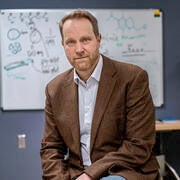
Matthew J. Campen
Matthew J. Campen, PhD, MSPH (Keynote Speaker)
Distinguished Professor, College of Pharmacy
University of New Mexico Health Sciences Center
“Minding the Nanoplastics”
Dr. Matthew Campen is a Distinguished Professor in the University of New Mexico College of Pharmacy. He received his bachelor’s degrees in biochemistry and psychology from Virginia Tech, then completed an MSPH and PhD in Environmental Science and Engineering from the University of North Carolina School of Public Health. Following a postdoctoral fellowship in the Johns Hopkins University School of Medicine, Dr. Campen moved to New Mexico and worked for several years as a toxicologist at the Lovelace Biomedical Research Institute. In 2009, he moved across town to accept a faculty position at the University of New Mexico College of Pharmacy.
Dr. Campen has been instrumental in establishing multidisciplinary, programmatic research programs at UNM, including several NIH-funded centers, such as the UNM Center for Metals in Biology and Medicine and the Southwest Center for Advancing Clinical and Translational Innovations. His research expertise is largely focused on how inhaled pollutants like ozone, particulate matter, and carbon monoxide can cause toxicity beyond the lungs, including neurological and placental health effects. He began researching the problem of microplastics about 5 years ago and found the science at the interface of plastics and human health was immature. He has worked to better understand the nature of exposures, dosimetry, and toxicity using approaches that incorporate real human/clinical samples.
Associate Professor of Population and Public Health Sciences
Keck School of Medicine
University of Southern California
“Windows of Vulnerability: Air Quality and the Adolescent Brain”
Dr. Megan Herting is an Associate Professor in the Department of Population and Public Health Sciences and the Director of the Herting NeuroImaging Laboratory at the University of Southern California. Her research focuses on how lifestyle and environmental factors, particularly air pollution, influence brain development, cognition, and mental health in children and adolescents. Using multi-modal MRI, cognitive assessments, and neuropsychological testing, she leads multiple NIH-funded projects examining air pollution's effects on neurodevelopment and psychopathology risk.
Distinguished Chair in Contemplative Neuroscience at the Center for Healthy Minds
University of Wisconsin-Madison
"Beyond the Airways: The Neural Effects of Asthma”
Dr. Melissa Rosenkranz is an Associate Professor in the Department of Psychiatry and holds the Distinguished Chair in Contemplative Neuroscience at the Center for Healthy Minds. She earned a Ph.D. in Psychology from the University of Wisconsin-Madison in 2008 and a Bachelor’s of Science degree, also from UW-Madison, in 1997. Since that time she has worked to develop a mechanistic understanding of how the contents of the mind influence physiological processes in the body and how the activities of the immune system shape how we experience the world. Melissa has amassed multi-disciplinary expertise at the intersections of psychology, neuroscience, immunology, endocrinology, and contemplative studies, leveraging a diverse array of methods from brain imaging to molecular biology. With federal funding from NCCIH and NHLBI, her work has identified both neural and immune signaling pathways that connect airway inflammation in the lungs of individuals with asthma to the psychological experiences of stress and emotion. Extending these relationships across the lifespan with funding from NIA, Dr. Rosenkranz's work also reveals links between chronic systemic inflammation, neuroinflammation, neurodegeneration, and long-term cognitive decline and dementia.
Importantly, Melissa’s work goes beyond basic science. She also examines the mind as a novel treatment target in chronic inflammatory diseases. She has shown, for example, that 8-weeks of training in mindfulness-based stress reduction improved asthma control and reduced airway inflammation in patients with asthma, particularly those with elevated symptoms of depression. She is currently working to expand this work and to accelerate its translation into the clinic.
Distinguished Professor and Chair, Department of Molecular Biosciences
University of California, Davis
"Evolving role of microglia following acute organophosphate intoxication: time and phenotype matter"
Dr. Pamela (Pam) Lein is Distinguished Professor of Neurotoxicology and Chair of the Department of Molecular Biosciences in the University of California, Davis (UC Davis) School of Veterinary Medicine. She also holds a faculty appointment in the UC Davis MIND Institute. Dr. Lein earned a B.S. in Biology from Cornell University in Ithaca, NY, a M.S. in Environmental Health Sciences from East Tennessee State University in Johnson City, TN, and a Ph.D. in Pharmacology and Toxicology from the University of Buffalo in Buffalo, NY. She completed postdoctoral training in Molecular Immunology at the Roswell Park Cancer Institute in Buffalo, NY. Her research focuses on the cellular and molecular mechanisms by which environmental contaminants contribute to the pathogenesis of neurodevelopmental and neurodegenerative disorders. Dr. Lein has been continuously funded by the U.S. National Institutes of Health for over 30 years, and she has >300 peer-reviewed publications and book chapters. She is actively engaged in teaching and mentoring veterinary, graduate and undergraduate students in neuropharmacology and neurotoxicology. Her service activities include Co-Editor-in-Chief of the journal NeuroToxicology and Executive Committee of the International Neurotoxicology Association.
Professor of Neuroscience
Del Monte Institute for Neuroscience
University of Rochester School of Medicine & Dentistry
"Influence of Sex and Cytokines on Microglia and their Modulation of Amyloid Pathology"
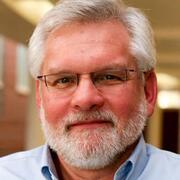
Dr. M. Kerry O’Banion is Professor and Vice-Chair of Neuroscience, Professor of Neurology, and a member of the Del Monte Institute for Neuroscience and the Wilmot Cancer Center at the University of Rochester School of Medicine & Dentistry in Rochester, New York. His research focuses on neuroinflammation and glial cell biology, emphasizing cellular interactions in in neurodegenerative disorders, including Alzheimer’s disease, as well as in CNS radiation exposure, and how these contribute to pathology and cognitive deficits in preclinical models. Originally trained as a molecular virologist, Dr. O’Banion received his MD and PhD in Microbiology degrees from the University of Illinois, Champaign-Urbana and carried out postdoctoral work as a Wilmot Cancer Fellow at the University of Rochester that contributed to the discovery of cyclooxygenase-2 (COX-2) as a critical mediator of inflammation. Dr. O’Banion has trained 5 postdoctoral fellows and 28 graduate students, including six MD-PhD students. His research has been supported by NIA, NINDS, NIDA, NIAID, NCI, NASA and the Department of Energy. In addition to his research, Dr. O’Banion has directed Rochester’s Medical Scientist Training (MD-PhD) Program since 2000 and co-directs an NIA funded T32 in Aging and Alzheimer’s disease.
Professor and Chair, Laboratory for Experimental Immunology of the Eye
Department of Ophthalmology
University of Cologne
"Microglia in retinal degeneration and pathological angiogenesis"
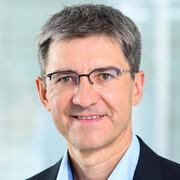
Prof. Dr. Langmann is a leading ophthalmologist and immunologist at the University of Cologne (Uni Köln) and University Hospital Cologne (UK-Köln), heading the Lab for Experimental Immunology of the Eye. He specializes in retinal diseases such as macular degeneration (AMD) and diabetic retinopathy (DR), focusing on the critical role of the immune system (microglia/macrophages) in these conditions, aiming for new immunomodulatory therapies, and he is the Vice Dean for Critical Infrastructures.